We've all been there: a patient returns weeks after a beautifully placed crown, complaining of sensitivity. Or worse, a restoration debonds entirely. That perfectly prepped margin and ideal occlusion mean nothing if the final link in the chain--cementation—fails.
Cementation isn't just the "glue"; it's a complex chemical and mechanical bond that determines the long-term success of our finest work, from single crowns and bridges to veneers and implants.
Let's break down the five most common pitfalls that can derail your restorations and review the practical, evidence-based protocols to avoid them.
1. The Debond: Cement Washout & Bond Failure
The Pitfall: The restoration loosens, debonds, or shows marginal leakage weeks or months after placement.
Why It Happens: This is a classic failure of either mechanical retention or chemical adhesion. The common culprits are an over-tapered preparation, insufficient surface treatment for the material, or simply choosing the wrong cement for the job.
How to Avoid It:
Master the Prep: Adhesion is not a substitute for proper prep design. Adhere to ideal principles:
- Taper: Aim for a 6–10 degree total occlusal convergence.
- Height: Ensure adequate axial wall height (e.g., ≥ 4 mm for molars) to maximize mechanical resistance and retention.
Respect the Material: You cannot bond all ceramics the same way.
- Glass-Ceramics (e.g., Lithium Disilicate): Must be etched with hydrofluoric (HF) acid (follow manufacturer times, approx 20s) and treated with a silane coupling agent before bonding with a resin cement.
- Polycrystalline Ceramics (e.g., Zirconia): Are non-etchable. They must be air-abraded (sandblasted, approx 50 µm Al2O3 at low pressure) to create micromechanical retention. Follow this with an MDP-containing primer to create a strong chemical bond.
2. The Complaint: Post-Cementation Sensitivity
The Pitfall: The patient calls the next day complaining of sharp or lingering thermal sensitivity after the anesthetic wears off.
Why It Happens: The most common cause is dentinal hypersensitivity from an improperly sealed dentin-restoration interface. This stems from over-drying the dentin (desiccation), over-etching, or micro-gaps that allow fluid to flow within the tubules.
How to Avoid It:
- Don't Over-Dry: When using a total-etch or selective-etch technique, leave the dentin slightly moist ("glistening") after rinsing. Desiccating the dentin collapses the collagen network and prevents a proper hybrid layer from forming.
- Seal the Tubules: Use a desensitizing agent (like GLUMA) or a universal adhesive before cementation. This is especially critical when using self-adhesive or conventional RMGI cements that don't create a distinct hybrid layer.
- Ensure a Full Seal: Confirm complete seating before tack-curing. An open margin is a direct highway for bacteria and fluid to the pulp.
3. The Adjustment: Improper Seating & High Occlusion
The Pitfall: The occlusion is high, or you discover an open margin after the final cure, forcing a lengthy adjustment or a complete remake.
Why It Happens: This is almost always a process error. The restoration fit perfectly at try-in, but hydraulic pressure from a viscous cement, residual temporary cement, or debris prevented full seating.
How to Avoid It:
- Mandatory Try-In: Always try in the final restoration. Use a water-soluble try-in paste (especially for veneers) to verify fit, margins, and shade.
- Clean and Clear: Thoroughly clean the prep (e.g., with pumice) and the intaglio (internal) surface of the restoration (e.g., with Ivoclean) after try-in.
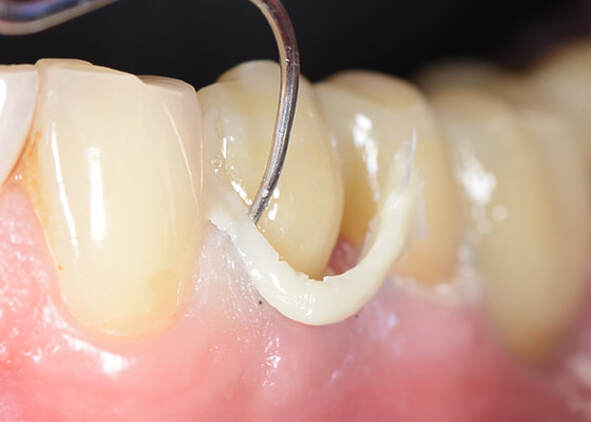
- Confirm Seating: Before any curing, use an explorer and dental floss to confirm the restoration is passively and completely seated. Floss should "snap" through the contacts just as it did at try-in.
- Check, Adjust, Check Again: Verify occlusion with articulating paper immediately after cleanup and make any necessary adjustments.
4. The Ticking Time Bomb: Excess Cement Around Implants
The Pitfall: Undetected residual cement, especially subgingivally, acts as a potent irritant, leading to peri-implant mucositis and potentially irreversible peri-implantitis.
Why It Happens: The lack of a Periodontal Ligament (PDL) around implants means there's no natural barrier or "warning system." Excess cement gets trapped in the sulcus and is notoriously difficult to detect and remove.
How to Avoid It:
- Control the Volume: This is the #1 rule. Never fill the crown. Place a thin bead of cement around the coronal half of the intaglio surface only.
Create an Escape Vent:
- Vented Abutment: Place a small hole on the lingual or buccal of the abutment to allow cement to escape.
- Retraction Cord: Place a single, dry retraction cord in the sulcus before seating to block cement from flowing apically.
- Use a Replica: Express cement into an abutment replica (copy abutment) and seat the crown on it first. This removes the gross excess before it goes to the patient's mouth.
- Clean and Confirm: Use floss (with a knot tied in it), explorers, and a periapical radiograph to confirm all excess is removed, especially interproximally.
5. The Disappointment: Esthetic Failures
The Pitfall: The final restoration looks "off." The shade doesn't match the adjacent teeth, the margin is visible, or the color seems to change over time.
Why It Happens: The cement is part of the final restoration's shade. An opaque cement can kill the translucency of an e.max crown, and the wrong shade can drastically alter a thin veneer. Furthermore, dual-cure cements can undergo shade shifts over time (due to amines) if not fully light-cured.
How to Avoid It:
- Try-In Pastes are Non-Negotiable: For anterior esthetics (veneers, translucent crowns), always use shade-matched, water-soluble try-in pastes. Show the patient in the chair before committing.
Choose the Right System:
- Veneers: Use light-cure-only resin cements. They are more color-stable (amine-free) and give you unlimited working time.
- Crowns: Use dual-cure cements with multiple shade options (e.g., Transparent, White Opaque, A2) to mask dark preps or enhance value as needed.
- Perfect the Margin: A smooth, perfectly sealed margin is invisible. Any gap or rough edge will capture cement and, eventually, stain.
Quick Reference: Cementation Protocols
Lithium Disilicate:
- Surface Prep (Intaglio): HF Acid Etch (approx 20s)
- Primer / Agent: Silane
- Recommended Cement: Resin Cement (e.g., Variolink)
Zirconia:
- Surface Prep (Intaglio): Sandblast (50 µm Al2O3)
- Primer / Agent: MDP Primer
- Recommended Cement: Self-Adhesive Resin (e.g., RelyX Unicem) or Resin + MDP
PFM / Metal:
- Surface Prep (Intaglio): Sandblast (50 µm Al2O3)
- Primer / Agent: Metal Primer
- Recommended Cement: RMGI or Self-Adhesive Resin
Implant Crown:
- Surface Prep (Intaglio): Sandblast Ti Abutment
- Primer / Agent: MDP (if bonding)
- Recommended Cement: Resin Cement (low excess) or a retrievable Temp Cement
Final Thought
Cementation isn't just the final step; it's the critical link that defines the restoration's long-term success. A few extra minutes spent verifying the protocol, controlling the cement, and confirming the seat will save hours in remakes, prevent patient discomfort, and protect the supporting tissues. By mastering cementation, you ensure your best work lasts.
Partner with Chase Dental Lab for restorations that seat easily, look natural, and last.
Disclaimer: The information provided in this article is for educational purposes only and is not intended to replace independent clinical judgment. Clinicians should evaluate each case individually and follow manufacturer instructions, current evidence-based guidelines, and their own professional expertise. Chase Dental Lab assumes no responsibility for patient outcomes resulting from the application of the information presented here.